them thar hills
Them There Hills is a radio show disguised as a science lesson disguised as a community conversation disguised as a playlist.
Every week, a new mineral or material: dysprosium, sand, antimony, nickel, is placed under the microscope and onto the turntable.
And every week, something surprising emerges: listeners hear not only minerals, but themselves; their place; their politics; their anxieties; their humor; their questions.
What we hear is what Alaska is thinking about: energy, land, extraction, identity, and also evidence of what we haven’t figured out how to talk about yet.
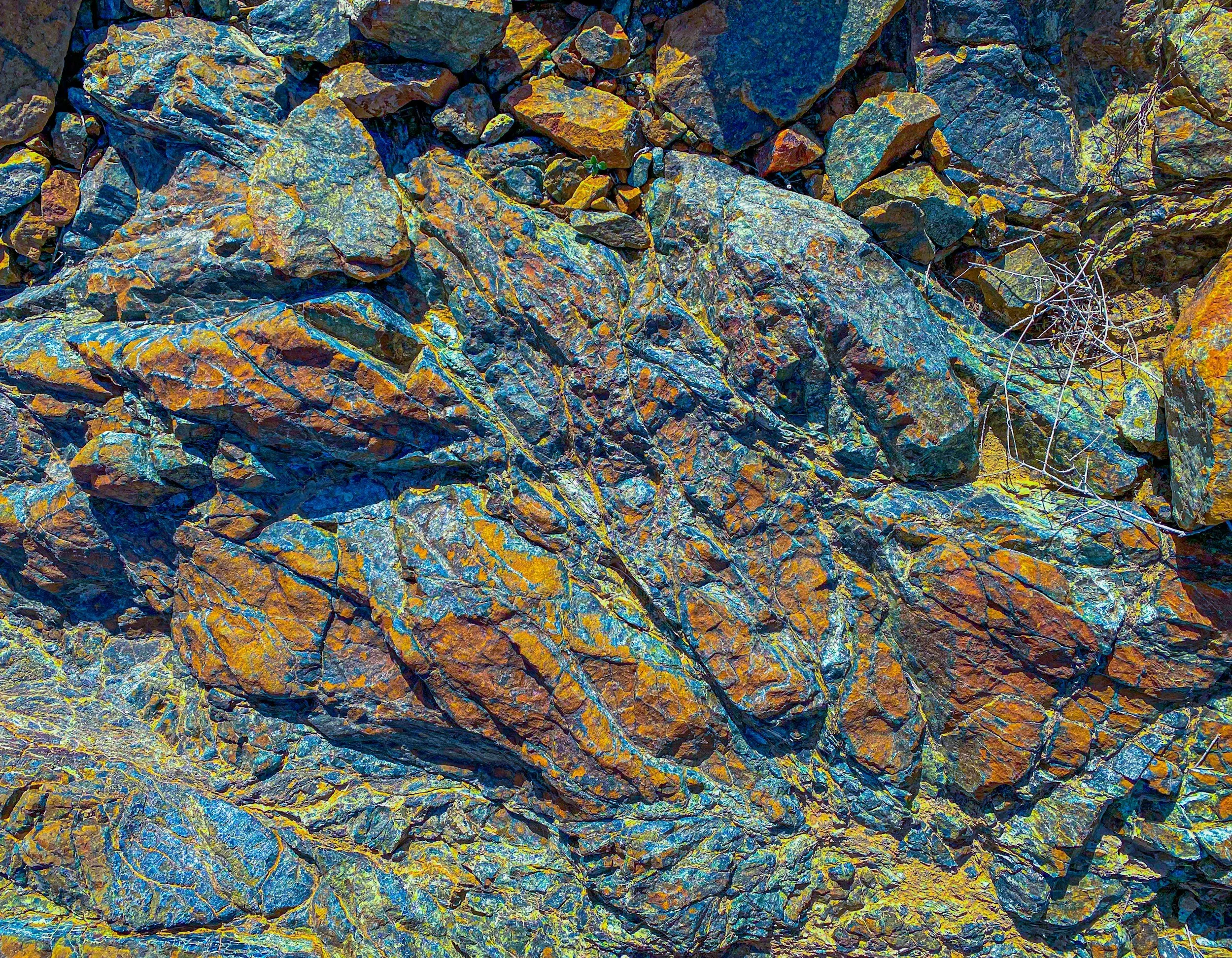
a portrait of Alaska told through sand, copper, dysprosium, antimony, and the people who carry stories of these materials.



critical to whom?
Across these episodes, listeners stepped into a world where the “critical” in critical minerals wasn’t an industry buzzword but a doorway into something stranger and more human.
Suddenly, sand wasn’t an infinite resource: it was a finite global commodity with an illegal supply chain, and hidden labor behind every pane of glass.
Copper isn’t just for wiring: it was Tlingit history, hydropower economics, spooky folklore, and a reminder that our landscapes have long memories.
Antimony isn’t just a chemistry footnote, it ‘s ancient eyeshadow, flame retardant, geopolitical leverage, and a symbol of how value slips away when we dig something up only to ship it out.
the ground remembers
In Alaska we are standing on old decisions.
Mining is never a trivial undertaking. It’s the re-routing of Cripple Creek that still shapes today’s watershed. It’s the Seward Peninsula lake that drains into the earth through a tunnel blasted a generation ago. It’s the “waste rock” that becomes tomorrow’s essential resource.
Resource extraction rearranges the land, and then the land quietly teaches us to live with the rearrangement. Every community path, every odd berm, every too-straight river bend whispers, someone changed me, even if we’ve long forgotten who or wThis goes far beyond geology and hydrography: how do we live in a place that remembers more than we do?

complexity is not a barrier to conversation. it is the conversation.
who benefits? who gets to decide?
What does all this critical activity mean for Alaska, for the people who live here & have called it home for millenia?
Why do we export raw materials only to import the finished products back?
Why can’t we refine minerals here?& if we could, would we want to?
Could “waste” tailings become tomorrow’s local treasure?
Can community benefit without community control?
These aren’t policy debates; they are kitchen-table musings aired live": conversations with Alaskan students, scientists, parents, musicians, folks trying to make sense of why Alaska remains rich in resources but poor in local processing, why we call minerals “ours” when most of the value leaves by barge, rail, or road.
This becomes a questions of sovereignty: tribal sovereignty, but also civic, economic, and narrative sovereignty.
Who gets to define what responsible development looks like?
Who gets to say no?
Who gets to imagine alternatives?
Who gets to structure the deals, and determine who benefits?
so that’s how that gets made
“Wait, I never thought about that.” Not about politics or policy, but about the built world. We’re surrounded by materials we barely notice.
Nickel isn’t just a battery metal, it stretched back into hip-hop slang and pocket change. Copper isn’t just a conductor, it was Tlingit mining traditions, and gold wasn’t just a shiny thing, it was urban scavengers sweeping sidewalks for gold dust, and a whirlpool lake drained by amateur prospectors. And sand, well sand turned out to be finite, fought over, precious thing.
recommendations
Across Them Thar Hills, a consistent truth emerges: communities living with the impacts of mineral extraction want policies that honor relationships between land, people, history, and future opportunity. The episodes reveal three clear priorities for Department of the Interior (DOI).
CO-GOVERNANCE AS A FIRST POLICY FOR CRITICAL MINERALS
Shift from consultation to co-governance with Indigenous worldviews, data sovereignty, and free, prior, informed consent into every minerals-related decision.
link critical minerals to community resilience at a policy level
Treat both mineral extraction and its aftermath as national security issues by linking permitting, monitoring, reclamation, and workforce development to community resilience - not commodity markets. This includes elevating abandoned mine cleanup, requiring long-term (100-year) land-use and transition plans, and ensuring new projects contribute taxes and profits directly to local energy, housing, and economic stability.
invest in the narrative
Address the social realities surrounding mineral development by investing in narrative infrastructure, youth pathways, and risk-sharing frameworks that keep communities whole. In short: mineral policy must be designed with, governed by, and accountable to the communities who live with its consequences, ensuring extraction leaves people better off than it found them.